24 October 2026
Eco-Friendly Driveway Paving Installment with Recycled Interlacing Pavers
Presented by @andreswrxs005
A driveway does more than park a vehicle. It establishes the tone for your house, handles stormwater coming off the roofing system, and takes the impact of day-to-day wear. For years I specified poured concrete and asphalt because that was the standard in our region. Then I dug up a 14-year-old paver driveway to add energy lines and uncovered I could salvage almost every rock, relay them, and leave the customer with a surface area that looked better than before. That job, and a six like it, convinced me that recycled interlacing pavers are the most flexible, sturdy, and environmentally sensible option for numerous homes.
This is what I have actually gained from layout benches, sloppy work sites, freeze-thaw winter seasons, and callbacks that came years later on. If you are planning a Driveway Paving Installation and desire it to be as reduced influence as possible, begin by comprehending what reused pavers can do, and what they need underneath to succeed.
Why recycled interlocking pavers are entitled to a close look
Recycled material tells just part of the tale. Most interlacing concrete pavers in the North American market include 5 to 15 percent recycled accumulations or concrete alternatives, and some producers have lines with 30 percent or more post-industrial product. There are also recovered pavers, drew from previous installations during restorations, that can be cleaned and reused. Past product content, the system itself, with specific devices on an adaptable base, brings ecological and sensible benefits concrete slabs can not match.
Pavers are functional piece by piece. If a delivery van leaves ruts, you do not need a saw and a complete team to cut and spot a slab. You raise the afflicted stones, recompact the base, include sand, and reset them. That repairability, throughout years of usage, maintains product out of dumpsters and spares you the carbon impact of wholesale replacement.
The surface area can be permeable. With the appropriate base and jointing, a paver driveway can infiltrate a meaningful share of rainfall. In several districts this aids fulfill stormwater needs and might minimize or eliminate the need for a new catch container. A 600 square foot driveway that infiltrates a half inch storm keeps regarding 1,870 gallons on website. Even a traditional interlocking driveway, with polymeric sand joints, sheds water more carefully than a broom-finished piece since it has micro appearance and many small sides that slow flow.
And after that there is the look. Recycled lines currently are available in clean rectangles for modern homes and tumbled devices with softened edges for older residences. Uniformity is excellent, however not so best that the surface really feels stamped. A driveway and surrounding Walkway Paving Setup can be collaborated without feeling overdesigned, which matters on household streets where rep stands out.
Sourcing: recycled web content versus reclaimed units
When clients ask for recycled, I clarify whether they suggest recycled content from the manufacturing facility or recovered pavers recovered from previous projects. The supply chain, cost, and performance differ.
Factory recycled material is predictable. Manufacturers publish arrays for recycled accumulations, pigments, or cement alternatives such as slag or fly ash. Compressive staminas usually meet the same minimums as virgin-product pavers, typically over 8,000 psi, with abrasion resistance in accordance with conventional lines. Colors come from integral pigments and face mixes rather than surface area finishes. Anticipate a device rate comparable to or approximately 10 percent greater than basic SKUs, relying on local motivations and volume.
Reclaimed pavers call for more effort. They get here on pallets with mixed wear, and measurements can differ a hair from batch to batch if they were made in various runs or eras. You require a client installer to mix pallets and manage side alignment. The benefit is personality and a smaller sized material footprint. When I used recovered concrete pavers on a 900 square foot driveway, we saw 5 to 8 percent damage during handling, after that almost none during service. We balance out that loss by purchasing an additional pallet and using the chosen items for snug edge cuts.
Reclaimed clay pavers are another choice, especially for period homes. They have deep shade and superb freeze-thaw performance if the units are strong and water absorption is reduced. Keep in mind the density; many clay pavers are 2.25 inches, while common concrete units are 2.75 to 3.125 inches. Mix and match just if you prepare your bedding training course accordingly.
Designing for water, website traffic, and climate
Start with drainage. A driveway pitch of 1 to 2 percent fits to walk on and relocates water without producing ankle-twisting slopes. Avoid directing overflow towards structures. If website grade makes that unpreventable, intend a trench drain or a subtle valley gutter along the house, then lead water to a bioswale or rain yard. Permeable paver systems go a step even more with open-graded stone bases that keep and infiltrate stormwater, but absorptive does not suggest flat. You still require pitch so that overflow locates a predictable outlet.
Traffic notifies thickness. For light property use, 60 millimeter pavers on a 6 to 8 inch base of compacted accumulation are common. If delivery van, Motor homes, or work vans utilize the driveway frequently, step up to 80 millimeter pavers and a 10 to 12 inch base, particularly in clay soils that hold water. Snowbelt regions benefit from thicker bases as a barrier versus frost heave. In sandy coastal dirts, you can remain closer to the lighter end of those arrays due to the fact that drainage is currently good.
Climate forms joint material options. Polymeric sand locks units with each other and discourages weeds, yet it can soften if joints remain wet under color in damp environments. In those locations I favor finer fractured rock jointing in permeable systems or a high quality polymeric sand placed during a completely dry stretch and misted thoroughly. In arid regions, polymeric sand does very well, and weeds are much less of a concern.
Permeable versus standard: exactly how to choose
Permeable interlocking concrete pavement is a complete system, not simply a different sand. It utilizes open-graded rock in the base layers, no fines, and larger, tidy rock in the joints to let water pass into the reservoir listed below. Appropriately built, it shops water under the driveway and allows it penetrate within 24 to 72 hours, depending upon dirt percolation.
Choose permeable if your town provides a stormwater credit, if your site floods, or if you wish to eliminate stress on older drainage infrastructure. I have actually seen absorptive systems cut peak runoff by fifty percent throughout summer storms on compressed great deals. The tradeoffs are expense and vigilance. The base rock is extra costly, excavation depth rises by 3 to 6 inches to make room for storage space, and you need to maintain the joints with a shop vac or light vacuum truck yearly or two to maintain gaps open. Efficiency relies on dirt. If your subgrade percolates at less than a quarter inch per hour, infiltration will certainly be slow-moving, and you should include an underdrain at the base tied right into a suitable discharge point.
Conventional interlocking paver driveway Walnut Creek driveways are simpler and more affordable to set up, and still gain sustainability points from recycled material and long life span. They can be constructed with a dense interlocking paver contractor Bay Area rated base and a one inch bedding layer of concrete sand. They may not penetrate a lot via the joints, however they do not break the way monolithic concrete slabs can. For several customers, this is the pleasant area: a durable surface with reduced lifecycle carbon and simple maintenance.
A useful installation sequence that saves headaches
When you boil down the process, a trustworthy Driveway Paving Setup with recycled interlocking pavers complies with a rhythm. This is the checklist I share with crews and home owners who wish to understand what they are paying for.
- Strip organics, form the subgrade, and small to rejection, maintaining or enhancing drainage.
- Install geotextile if dirts are silty or clayey, then location base accumulation in lifts, condensing each pass.
- Screed the bed linens layer to a consistent one inch thickness without walking on it afterward.
- Lay pavers from the most affordable factor upslope, reduced edges to fit, and established solid side restraints.
- Compact the area with a plate compactor and protective mat, sweep in jointing material, after that portable again.
Small work can be done with 2 or three people in a week. Larger or even more intricate driveways, with contours and apron shifts, stretch to 2 weeks. The distinction in between a driveway you admire for twenty years and one you take care of in 3 usually shows up in the first 2 steps. Rushed subgrade preparation amplifies expense later.
Subgrade and base, where the project is won or lost
Soils inform you what the base need to do. A quick area examination aids: squeeze a handful of moist soil. If it falls apart, you have a sandy base and good drain. If it forms a bow that holds together, it is clayey and will hold water. I likewise carry a dynamic cone penetrometer for larger jobs to evaluate bearing capacity after compaction. You do not require laboratory numbers for a house driveway, yet you do require to see that a jumping jack or plate compactor makes just pale impacts and the surface area does not pump when you stroll on it.
For traditional systems, use a thick rated aggregate like crusher run with a mix of stone and fines. Place in 3 to 4 inch lifts, small to 98 percent of customized Proctor if you have testing, or to refusal if you do not. In practice, that implies multiple passes with a plate compactor till you can drag a steel rake throughout the surface area without displacing product. Prepare for 6 to 8 inches of compressed base for autos, up to 12 inches where heavy vehicles will certainly sit.
Permeable systems make use of open-graded stone. A typical develop is 4 to 8 inches of ASTM No. 57 rock over 8 to 12 inches of No. 2 or No. 3 stone, both compacted with a smooth drum or hefty plate. The voids in these rocks keep water, so do not include fines. A nonwoven geotextile listed below the base aids separate the subgrade from the tank without clogging. Underdrains, if used, rest at the bottom of the base upon the low side and day-light to a safe outlet.
If your website inclines toward the road and you require to match an apron, control altitude very carefully. I shoot grades with a laser level in the morning, mark string lines on risks, and check after each lift. The most typical rookie mistake is to neglect just how much the final compaction will go down the paver surface area, typically by a 8th to a quarter inch, and to forget the bed linens layer density. The best installs complete flush with nearby limits and aprons, not pleased, not shy.
Patterns, side restrictions, and the look that lasts
Patterns matter for tons and looks. Herringbone, either at 45 or 90 levels to the centerline, distributes wheel loads best and stands up to creep. I use it on the majority of driveways even when the paver is a modern-day slab shape. Running bond looks crisp however can reveal wheel monitoring if the driveway is narrow and autos keep the same path. Basketweave gets along on little city driveways and older homes but can be active on broad areas. The choice does not change base requirements, but it does affect exactly how the eye reviews the space.
Edge restraint is not optional. Plastic side restraint with 10 inch spikes carries out well on straight runs and mild curves. On limited distance or under high car loads, I favor a concrete side beam set on a compressed trench outside the base, with the pavers butted limited to it. In cold environments, keep concrete light beams listed below the bedding layer so they do not imitate a frost catch. Falling short sides are one of the most usual source of paver movement, specifically where driveways satisfy the road and tires turn as they turn.
If you are blending redeemed and new recycled-content pavers, completely dry lay a large sample area first. Stand back at sunset when colors silence somewhat and again at twelve noon when they pop. That is the best time to determine whether to blend pallets program by training course or to establish brand-new systems at the boundary as a structure and redeemed in the center. Mixing prevents noticeable patches that look like fixings also when they are not.
Jointing and compaction, where skill truly shows
After you lay the area and set up restraints, portable the pavers with a plate compactor fitted with a urethane mat. A couple of passes in various instructions typically seat the systems right into the bedding layer. Move in jointing sand or clean rock, after that portable once again to round off joints. For polymeric sand, follow the maker's directions on dryness and misting. Spray as well hard and you wash out the binder; spray inadequate and the leading skins over without healing deeper in the joint.
In absorptive systems, the joint accumulation needs to be the same rank as the bedding layer, normally a tiny, clean, fractured stone. The goal is to connect the gap while leaving gaps for water. Vacuum cleaner the surface at the end to clear fines. On both systems, anticipate small settlement in the very first months if the bed linen layer was not flawlessly uniform. It is far better to return for a one hour touch-up than to overfill joints on day one and tarnish paver faces.
Bringing the walkway along for a constant finish
Driveway Paving Setup seldom stands alone. Many homeowners desire the front stroll updated at the exact same time so the entrance checks out as a single make-up. A coordinated Pathway Paving Setup can use the very same paver, however I like to change either range or pattern so the pathway really feels customized to individuals as opposed to autos. As an example, if the driveway is 80 millimeter rectangles in herringbone, the walk could be the same shade in a running bond soldier training course that discreetly narrows near the door to create a pinch factor, a traditional landscape trick to make access really feel intimate.
The subbase beneath a sidewalk can be thinner, typically 4 inches, with the very same high quality of compaction. Keep slopes gentler, around 1 percent, and break grades where required to redirect water right into planting beds. Where the walk fulfills the driveway, bevel the shift so shovels and snow blowers cross easily in winter months. Uniformity in joint sand, edge restriction style, and border paver makes the two surfaces checked out as a family without looking like a directory set.
Cost, carbon, and what the numbers look like
Material and labor expenses differ by area, yet some proportions hold. In most markets, a conventional interlocking driveway using recycled-content pavers prices out in between 18 and 28 bucks per square foot, all in. Permeable systems run 25 to 40 dollars per square foot as a result of much deeper excavation and open-graded rock. Making use of recovered pavers can cut 1 to 3 dollars per square foot on products if supply is great, yet labor will certainly be a little greater due to sorting and blending.
On carbon, released environmental product declarations for concrete pavers reveal symbolized carbon roughly in the variety of 100 to 150 kg CO2e per cubic meter of concrete, with recycled material shaving a tiny percent by replacing concrete or accumulation. The actual savings come by years. A slab that splits and requires substitute at year 12 carries a 2nd carbon hit. A paver area that you repair in your area can easily run 25 to 40 years with only tiny enhancements of sand and the occasional replacement paver.
If you select a permeable system that removes a brand-new catch container or minimizes storm pipeline size, count the prevented concrete and PVC. On a sloped great deal I functioned last spring, we replaced a prepared 10 inch storm line with a 6 inch line after modeling showed the permeable base storage cut peak circulation by about 40 percent. That saved materials and a day of excavator time.
Winter, deicing, and long term care
Concrete pavers manage freeze-thaw cycles well, particularly when they fulfill ASTM freeze-thaw sturdiness criteria. Troubles in winter season typically come from water caught under the surface or hostile deicers. Stay clear of magnesium chloride blends that can soften some polymeric sands if the joints are still brand-new. Salt chloride, the usual rock salt, is acceptable on cured joint sand and on pavers made to domestic criteria, though it will certainly worry plants at the side. Calcium chloride works at reduced temperature levels and much less damaging to concrete, yet it can leave residue. If you can, utilize sand for traction on the most awful days and move it up in spring.
Maintenance is light. Move grit in springtime, top up joint sand where automobiles turn, and evaluate sides. Permeable systems require a light vacuuming of the joints every year or two if fines collect. Strategy a specialist cleansing every five to seven years, not with a stress washer, which can deteriorate joint material, yet with a vacuum sweeper designed for absorptive pavements. Sealing is optional. A breathable, passing through sealant can make oil clean-up easier and escalate shade, yet I generally skip it on driveways with tumbled or textured pavers because all-natural patina looks better over time.
Mistakes I see, and how to stay clear of them
Even excellent crews fall into patterns that cause trouble later on. Keep an eye out for these repeat offenders.
- Under-compacted base, particularly near sides and at utility crossings, resulting in negotiation ruts.
- Inconsistent bed linen layer density, which telegrams as lippage or rocking pavers.
- Missing or flimsy edge restraints, welcoming movement and open joints along the borders.
- Poor water monitoring, with driveways pitched towards garages or planters without an overflow path.
- Rushing polymeric sand in moist conditions, causing haze or soft joints that clean out.
Every among these is less costly to avoid than to fix. None require exotic tools, just time and attention.
A field example that gained its keep
A family in a 1920s brick home called around a crumbling asphalt driveway with a red clay block walk that did not match your house. The website pitched towards the cellar stairway, and every tornado sent out water under the door. They desired a greener service but were doubtful regarding permeable systems. We suggested an 80 millimeter recycled-content concrete paver in a cozy gray for the driveway, permeable near the house with an underdrain, and a reclaimed clay paver stroll in a herringbone pattern to link right into the block facade.
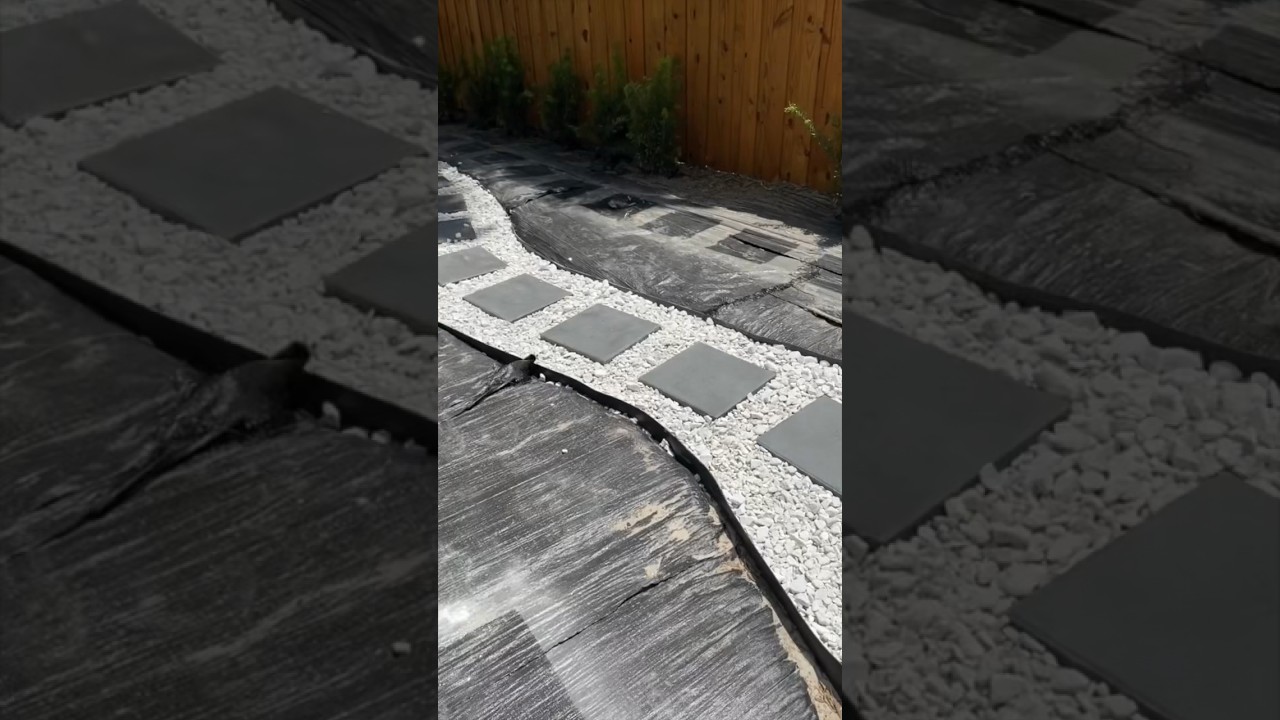
We got rid of 14 inches of dirt near the house, less even more out where the quality permitted, then mounted an absorptive base that tipped down toward a tiny rain yard along the side lawn. The underdrain linked only as an alleviation, set an inch greater than the base bottom so it would certainly run throughout huge tornados however remain completely dry otherwise. The driveway pitched 1.5 percent to the street, with the first 10 feet near your home constructed absorptive. Past that, the system transitioned to a traditional thick graded base to conserve expense where seepage mattered less.
On a 2 inch summer tornado 3 months later, the home owner emailed an image. The permeable area near the house ingested the water that used to rush towards the steps, the rain garden loaded and drained pipes by the next early morning, and the street stayed clean. That hybrid method saved them about 4,000 dollars compared to a fully absorptive driveway while addressing the particular threat at the house.
Permitting, evaluations, and neighbors
Municipal guidelines touch even more driveway projects than most property owners expect. Some communities cap brand-new invulnerable area, others need a stormwater prepare for enhancements above a threshold, typically 500 to 1,000 square feet. Permeable pavers may count as pervious if the complete section fulfills requirements, including base depth and soil seepage rates. Take the additional day to illustration a section, label stone ranks, and reveal overflow paths. Assessors appreciate clearness, and authorizations relocate faster.
Historic districts and property owners associations typically control shade and structure. Recycled-content pavers can be found in earth tones and grays that blend with older homes, and numerous satisfy stringent side and joint profile standards. Bring physical samples to examine boards when you can. A tiny tray of pavers, dry and misted, makes approvals smoother than a PDF with swatches.
Neighbors matter too. Paver saws with dirt shadows maintain silica dirt down, yet they still hum. I schedule the loudest cutting for noontime and offer both nearby houses a heads-up. It costs absolutely nothing and makes perseverance when we need an extra day.
When interlocking pavers are not the best move
There are websites where I steer clients elsewhere. Steep driveways that go beyond 12 percent and see a lot of stopping can mess up the surface area, even with herringbone patterns and excellent quality sand. Tight spending plans often prefer asphalt with a crisp paver apron at the road and near your home, booking the greater expense therapy where it shows and where repairability issues. If the subgrade is infected fill with hidden particles, plan on over-excavation and engineered fill. If the client will certainly not fund that, a flexible surface area can still work, however life expectancy drops, and I state that out loud.
Practical suggestions that make a huge difference
Plan distributions so pallets rest near the lay area. Moving pavers two times lose time and energy. Keep pallets from different color lots in rotation to blend color. Shop polymeric sand in a completely dry garage, not in the lawn where a passing shower can spoil it. Use a thin plywood sheet under home plate compactor as a makeshift mat if the urethane pad goes missing. Set one inconspicuous paver without sand, mark its place on a plan, and use it as a yearly examination square to draw and inspect the bed linen and base if needed.
If you expect great deals of oil drips, pick a mid-tone grey with mottling. It conceals discolorations much better than solid light colors. For garages that sometimes leak, include a little apron of denser joint sand immediately outside the door to catch liquids before they penetrate.
The bottom line
A well designed, well built interlocking paver driveway with recycled material uses less virgin product upfront and far much less over its life expectancy. It manages water much better, tolerates repair service, and shields your budget and perseverance when a corner resolves or a tree root surprises you. Combine it with a thoughtful Pathway Paving Installation and the front of your home begins to work as a single landscape, not simply a route from street to door.
The craft lives in early decisions you can not see once the pavers go down: soil analysis, base choice, water drainage lines, and side restriction. The noticeable details, pattern and shade and border, do not carry the load on their own. Wed both fifty percents, and the driveway will feel calm underfoot and under tire for decades, which is the real measure of a lasting surface.